Introduction
Every year, from late October to early November, people in North America and Latin America celebrate two important holidays related to the dead: Halloween and Día de los Muertos (Day of the Dead). At first glance, these two celebrations may seem similar, as they both revolve around death and spirits. However, these two traditions have very different cultural roots and offer unique views on how each culture approaches death. In this article, we’ll explore the differences and similarities between Halloween and Día de los Muertos, and how these holidays reflect the traditions of their respective countries.
The Origins of Halloween
Halloween is celebrated on October 31, primarily in the United States, Canada, and other English-speaking countries. Its origins trace back to the ancient Celtic festival of Samhain, which marked the end of the harvest season and the beginning of winter. During Samhain, it was believed that the veil between the world of the living and the dead was thin, allowing spirits to cross into the human world. With the Christianization of Europe, Samhain transformed into All Hallows’ Eve, which eventually became modern-day Halloween.

The Origins of Día de los Muertos
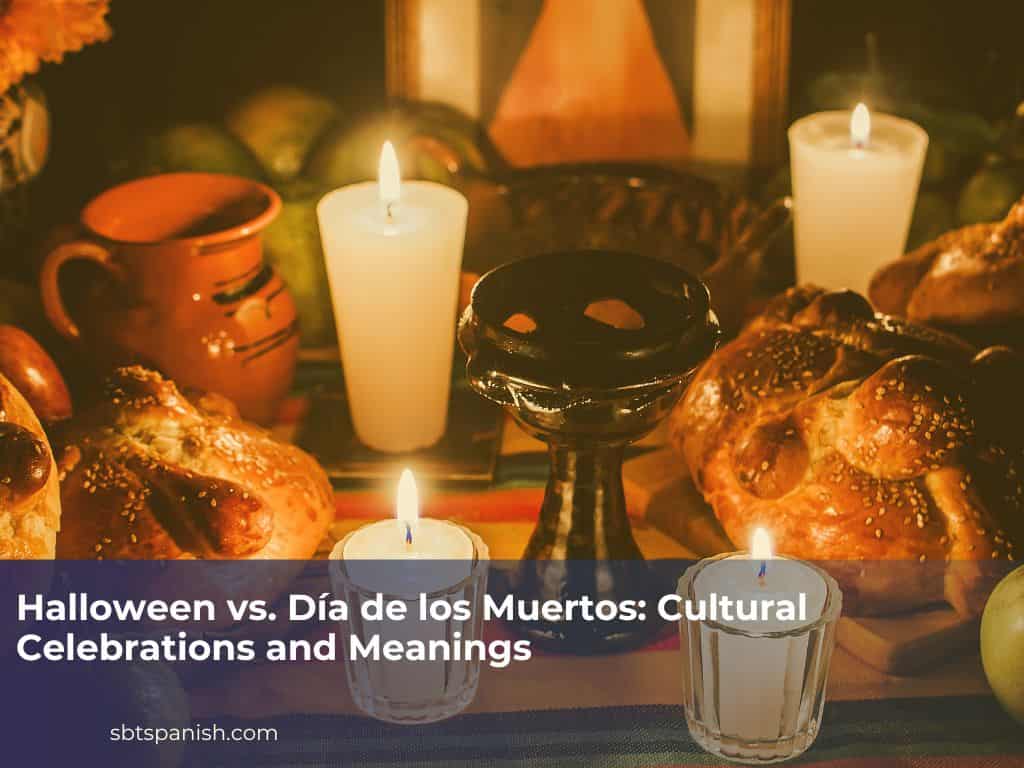
Día de los Muertos (Day of the Dead), on the other hand, has its roots in the pre-Hispanic cultures of Mexico, particularly the beliefs of the Aztecs, who dedicated several weeks a year to honoring their dead. After the Spanish arrived, this tradition merged with the Catholic holidays of All Saints’ Day and All Souls’ Day, and today it is celebrated on November 1 and 2. Día de los Muertos is a joyful celebration where families remember and honor their deceased loved ones through altars (ofrendas), food, music, and visits to cemeteries.

Similarities Between Halloween and Día de los Muertos
Although these two holidays have different origins, they share some similarities:
- Connection with death: Both Halloween and Día de los Muertos are related to the idea of death and the afterlife. In both traditions, it is believed that the spirits of the dead temporarily return to the world of the living.
- Shared symbols: Both Halloween and Día de los Muertos use images of skulls and skeletons. In Halloween, these images are often associated with fear and the macabre, while in Día de los Muertos, skulls (especially sugar skulls) are colorful and are used to honor deceased loved ones.
- Celebration with costumes: Wearing costumes is common in both holidays. In Halloween, costumes are a form of entertainment, often representing scary figures like witches, monsters, and ghosts. In Día de los Muertos, some people dress as Catrinas or skeletal characters to pay homage to the dead.
Differences Between Halloween and Día de los Muertos
- Cultural perspective on death: One of the most notable differences between Halloween and Día de los Muertos is how each holiday views death. In Halloween, death is presented as something frightening and sinister, whereas Día de los Muertos celebrates death as a natural part of life, a time to joyfully remember loved ones who have passed away.
- Length of the celebration: Halloween is a one-night event, celebrated on October 31. Día de los Muertos, however, lasts two days: November 1, which honors deceased children (Día de los Inocentes), and November 2, which is dedicated to deceased adults.
- Rituals and practices: On Halloween, common activities include trick-or-treating, costume parties, and decorating homes with spooky themes. In Día de los Muertos, families prepare altars at home or in cemeteries, with photos, food, and objects that their deceased loved ones enjoyed in life, as a way to invite them to “visit” their family.
Cultural Significance
Halloween has evolved into a highly commercial holiday, especially in the United States, where people spend heavily on costumes, candy, and decorations. Although it has roots in ancient pagan rituals, its spiritual meaning has largely been overshadowed by the festive and playful aspects of the celebration.
Día de los Muertos, on the other hand, remains a deeply rooted celebration in Mexican culture, where honoring the memory of the dead and celebrating the continuity of life are central themes. For many, it’s a time to connect with their ancestors and reflect on the cyclical nature of life and death.
Conclusion
While Halloween and Día de los Muertos may seem similar in some ways, they are very different celebrations that reflect the cultures from which they originate. Halloween focuses on the macabre and entertainment, whereas Día de los Muertos is a deeply spiritual celebration that honors the memory of deceased loved ones. Both holidays offer unique perspectives on death, and learning about them is a great way to appreciate cultural diversity.
Want to learn more about the fascinating cultural traditions of the Spanish-speaking world? At SBT Spanish Academy, we help you explore the Spanish language while diving deeper into the rich customs and traditions of its people. Contact us today for a free class and begin your cultural and linguistic journey with us!
Sources:
- History.com – Samhain: The Origins of Halloween
- National Geographic – Day of the Dead
- Smithsonian Magazine – Traditions and Change: The Transformation of Día de los Muertos in the United States